

Oropharyngeal Airway vs Nasopharyngeal Airway
Arete Medical Devices Response to the Zhou et al. Heliyon Study
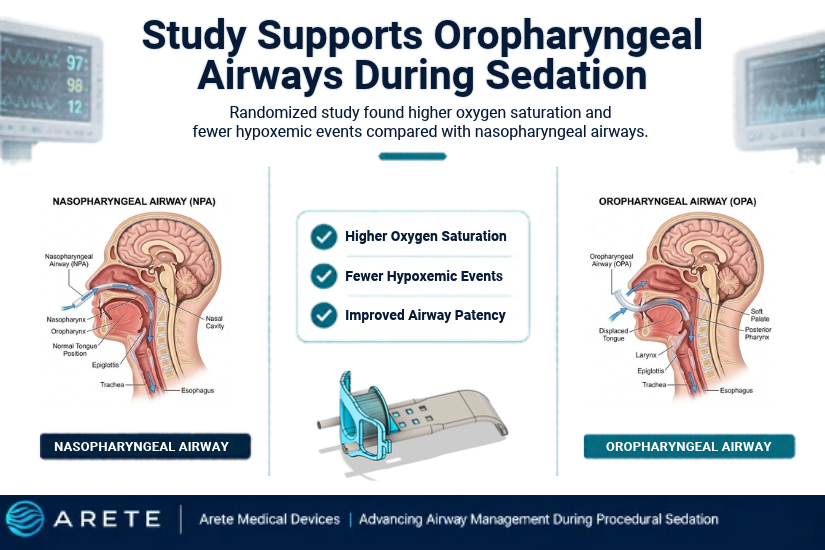
The findings published by Pei Zhou and colleagues in Unveiling the Impact of Airways: A Comparative Analysis of Oropharyngeal and Nasopharyngeal Airways in Painless Fiberoptic Bronchoscopy are encouraging for clinicians who utilize oral airway-based approaches during procedural sedation. The study demonstrated that patients managed with an oropharyngeal airway (OPA) experienced higher oxygen saturation levels and fewer hypoxemic events than those managed with a nasopharyngeal airway (NPA), leading the authors to conclude that OPAs provided a superior respiratory safety profile in this clinical setting.
Why This Matters
Procedural sedation continues to expand across endoscopy, bronchoscopy, ambulatory surgery, and non-operating-room anesthesia (NORA) environments. One of the greatest challenges during sedation is maintaining airway patency while ensuring adequate oxygenation and ventilation. The Zhou study reinforces a principle that anesthesia providers have long appreciated: maintaining an open oral airway can play a critical role in preserving respiratory function during sedation.
The study’s findings suggest that airway devices capable of preventing upper-airway obstruction can have a meaningful impact on patient safety by reducing episodes of hypoxemia and improving oxygen delivery during procedures.
Where EndoFlow™ Fits In
At Arete Medical Devices, we view this study as further validation of the importance of oral-airway-based management strategies during sedation.
Traditional OPAs effectively address a single challenge: keeping the tongue from obstructing the airway. However, modern sedation practice requires clinicians to manage much more than airway patency alone. Providers must simultaneously:
- Maintain a patent airway
- Deliver supplemental oxygen
- Monitor ventilation continuously through end-tidal CO₂ (EtCO₂)
- Respond rapidly to airway obstruction or respiratory depression
- Manage oral secretions when necessary
EndoFlow™ was developed to address these needs in a single integrated platform.
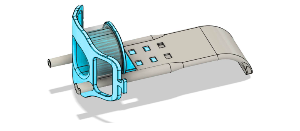
While the Zhou study compared OPAs to NPAs, it did not evaluate technologies that combine airway support with oxygen delivery and capnography. EndoFlow extends the benefits demonstrated by traditional OPAs by incorporating:
- Adjustable oral airway support
- Integrated oxygen delivery
- Continuous EtCO₂ sampling
- Suction access without removing the airway
- Reinforced bite-block functionality
The Bigger Clinical Opportunity
Perhaps the most important takeaway from this study is not simply that OPAs outperformed NPAs. Rather, it highlights the value of oral-airway-based approaches in maintaining respiratory stability during sedation.
As healthcare providers increasingly adopt capnography-guided sedation and enhanced respiratory monitoring protocols, the need for devices that support both airway patency and ventilation monitoring continues to grow. EndoFlow was designed specifically for this evolving clinical environment.
Arete’s Perspective
The Zhou et al. study reinforces the importance of oral airway management during procedural sedation. EndoFlow builds upon the proven benefits of traditional oropharyngeal airways by integrating oxygen delivery, continuous EtCO₂ monitoring, suction access, and airway maintenance into a single device. As respiratory monitoring standards continue to evolve, integrated airway solutions such as EnooFlow have the potential to simplify workflow while supporting patient safety and clinical efficiency.
Comments are closed