

Comparison of Nasopharyngeal Airway and Oropharyngeal Airway
What the OPA vs. NPA Comparison Means for Modern Airway Management
A recent educational review, Comparison of Nasopharyngeal Airway and Oropharyngeal Airway, provides a comprehensive side-by-side evaluation of two of the most commonly used airway adjuncts: the nasopharyngeal airway (NPA) and the oropharyngeal airway (OPA). The article reviews indications, contraindications, materials, and appropriate clinical use cases for both devices.
One key takeaway is particularly noteworthy: the review highlights that oropharyngeal airways are generally preferred in unconscious patients because they are specifically designed to prevent the tongue from collapsing against the posterior pharynx and obstructing the airway. In contrast, nasopharyngeal airways are often utilized when a patient retains a gag reflex or cannot tolerate an oral airway.
Why This Matters
Maintaining upper-airway patency remains one of the most important challenges during anesthesia and procedural sedation. Airway obstruction caused by posterior tongue displacement can rapidly lead to oxygen desaturation, increased airway interventions, and interruptions during procedures.
The review reinforces something clinicians have recognized for decades: when appropriate for the patient, the OPA remains one of the most effective and widely used tools for maintaining a clear oral airway.
Where CapnoFlow™ Fits In
At Arete Medical Devices, we view this comparison as validation of the foundational role that oral airways play in airway management.
Traditional OPAs such as Guedel and Berman airways were designed primarily to prevent airway obstruction by maintaining tongue displacement. While effective, modern procedural environments demand additional functionality from airway devices.
Today’s clinicians are often expected to simultaneously:
- Maintain airway patency
- Deliver supplemental oxygen
- Monitor ventilation through end-tidal CO₂
- Manage oral secretions
- Respond quickly to respiratory compromise
CapnoFlow™ was developed to build upon the proven benefits of the traditional OPA while integrating additional functionality into a single device.
CapnoFlow™ Features
- Adjustable oropharyngeal airway design
- Integrated oxygen delivery channel
- Continuous EtCO₂ monitoring capability
- Dedicated suction access
- Bite-block functionality
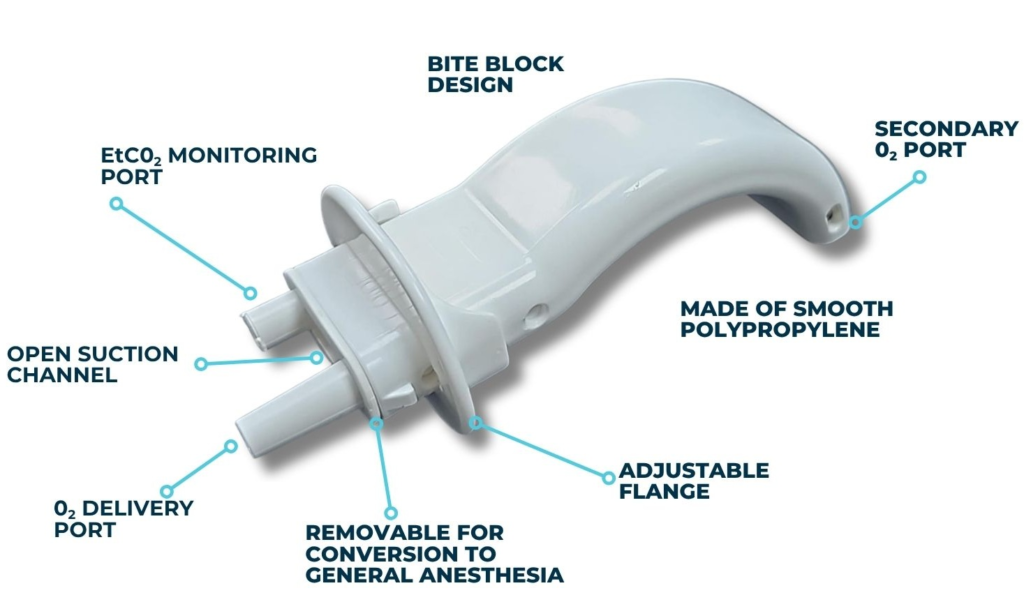
By combining these capabilities, CapnoFlow seeks to simplify airway management during monitored anesthesia care (MAC), procedural sedation, and other settings where respiratory monitoring and airway patency are equally important.
Looking Beyond Airway Patency Alone
The OPA versus NPA comparison provides a useful reminder that selecting the appropriate airway adjunct can significantly impact patient management. However, as anesthesia and sedation practices continue to evolve, healthcare providers increasingly require solutions that do more than simply maintain a patent airway.
CapnoFlow represents an effort to extend the utility of the traditional oropharyngeal airway by integrating airway support, oxygen delivery, capnography, and suction access into a single platform designed for today’s procedural environment.
Key Takeaway
The OPA vs. NPA comparison reinforces the value of oral airway management for maintaining airway patency in appropriate patients. CapnoFlow builds on this well-established foundation by combining the proven benefits of an oropharyngeal airway with integrated oxygen delivery, EtCO₂ monitoring, and suction access to support modern procedural sedation and anesthesia workflows.
Comments are closed